By now you know that there are many benefits to using an NFA trust to acquire your NFA items.
However, once you have your trust instrument in-hand, there is still much work to be done.
In this article, I will walk you through the process starting from the moment you receive your trust instrument.
NOTE: Some of my clients reading these instructions were directed here when I restated their existing trust. The following steps are equally applicable to a trust that is being created and one that is being restated.
Executing The Trust
Step 1: You must have your trust instrument notarized. This is crucial! Your trust does not become effective until it is notarized. You will also need to sign and date any schedules attached to your trust.
Places that offer notary services include your local bank and UPS/FedEx stores. I do NOT suggest using online options or services that have you digitally sign the document since the ATF has recently started denying applications where the trusts are digitally signed and the ATF does not recognize the validity of the signing certificate. It is best to simply avoid the issue and have it manually notarized.
You will only need to have one original copy of the trust notarized and may then make additional copies from that original.
Step 2: You should place the notarized original in a safe place after making as many copies as you need. Do not give your original to the gun store or mail it to the ATF!
How many copies should you make? You will need a copy for each of the Joint Trustees and Successor Trustees. Additionally, you should place a copy in your range bag. That way, you will have it with you at all times that you are in possession of trust-owned items.
While the advent of the eForms system has largely eliminated the need for paper applications, I should note that you will also need one copy to submit to the BATFE with any paper Form 4 or Form 1 application that you may submit. Please note that this copy will NOT be returned to you.
Note: These copies should include all schedules as well as the main body of the trust instrument.
While not legally required, I HIGHLY recommend that you email me a scanned PDF copy of all 17 pages of your signed and notarized trust in case yours is ever lost or destroyed. This would also allow me to provide a copy to your family if you passed unexpectedly and they could not find an executed copy.
Email the PDF of the Notarized Trusts to: [email protected].
You will also need this PDF version to use the eForms system.
Step 3: You should clearly identify the physical assets you initially transferred into the trust as trust property. You do this by taking a $10 bill and a single round of ammunition, placing them into an envelope with the name of the trust on it, and placing the sealed envelope in a secure place.
Note: The NFA items which are the subject of the application are not added to the trust until the application is approved.
Adding NFA Assets to the Trust
IMPORTANT: If your FFL is using a kiosk or the eforms system then the data entered there will create your Form 4 and you do not need to do a separate one. You also do not need to do a Form 1 if you are buying an item. Those are only required if you are making your own NFA item.
Both Form 1 (making an NFA item) and Form 4 (acquiring an NFA item already in existence) are now supported in the eForms system. I highly recommend that you take advantage of this and not submit any paper applications unless absolutely necessary.
If you are buying an NFA item and doing an eForm 4, the FFL will guide you through the process.
Finally, if you made the mistake in the past of acquiring NFA items in your individual capacity, I have a detailed guide to the paper process for moving individually owned items into the NFA trust.
And as of January 2026, you may also do the individual-to-trust process via eForms.
What to do When You Receive an Approved Tax Stamp
While not legally required, I HIGHLY recommend that you email me a PDF copy of any approved tax stamp you receive to be added to your client file.
This will allow me to provide a copy to you if yours is lost or destroyed or to your family if you pass and they cannot find one or more tax stamps.
Email the approved tax stamps to: [email protected].
After all of your items are approved, if you want to add one or more Joint Trustee to the trust (who can have unattended access to the items while you are alive) then email [email protected] with their FULL legal name and ask me to “Add them to Schedule B” and I will do that update as well.
Adding Non-NFA Assets to the Trust
Your NFA trust is perfectly capable of holding non-NFA items. All non-NFA items and accessories you wish to have owned by the trust should be placed on a printed list to be stored with the trust (see the notes on Schedule A of your completed trust).
With the upcoming Virginia Assault Weapons Ban, it is crucial to have all items that meet their definition of ‘assault firearm’ documented as having been owned prior to July 1, 2026 so that they fall under the grandfathering provisions of that bill.
I have a sample spreadsheet you can use to document your collection available for download.
By automatically incorporating all listed items, you no longer need to update your Schedule A every time you buy or sell a non-NFA item.
IMPORTANT NOTE: If your trust was drafted prior to July of 2019 then your Schedule A will not contain language allowing you to attach a detailed list of non-NFA items. If you have the older version then I will be glad to provide an update to your Schedule A with the latest language free-of-charge.

 When completing a Form 1 application for the manufacture of an NFA item on which you will be paying the applicable tax, the text accompanying Question Number 1 always causes confusion for the new collector.
 Once again a client has asked me the age-old question “Do you have to be 21 to buy NFA items?”
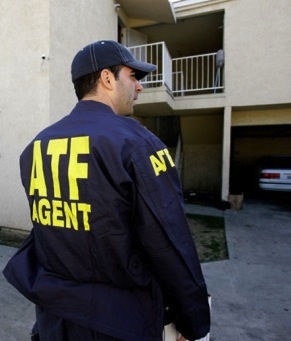 One of the most common myths that I hear about owning NFA items involves the supposed ability of ATF officers to search your home at any time of the day or night without the need for a warrant.
 While not legally required, I HIGHLY recommend that you email me a scanned PDF copy of all 17 pages of your signed and notarized trust in case yours is ever lost or destroyed. This would also allow me to provide a copy to your family if you passed unexpectedly and they could not find an executed copy.
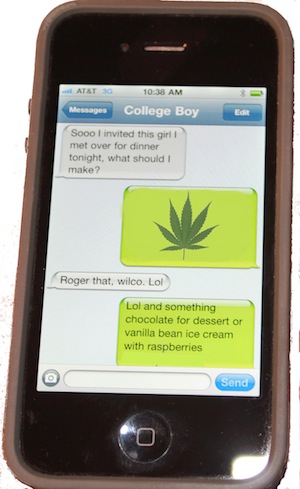 Your communications, including text messages, are private and may only be intercepted with a warrant … right???